

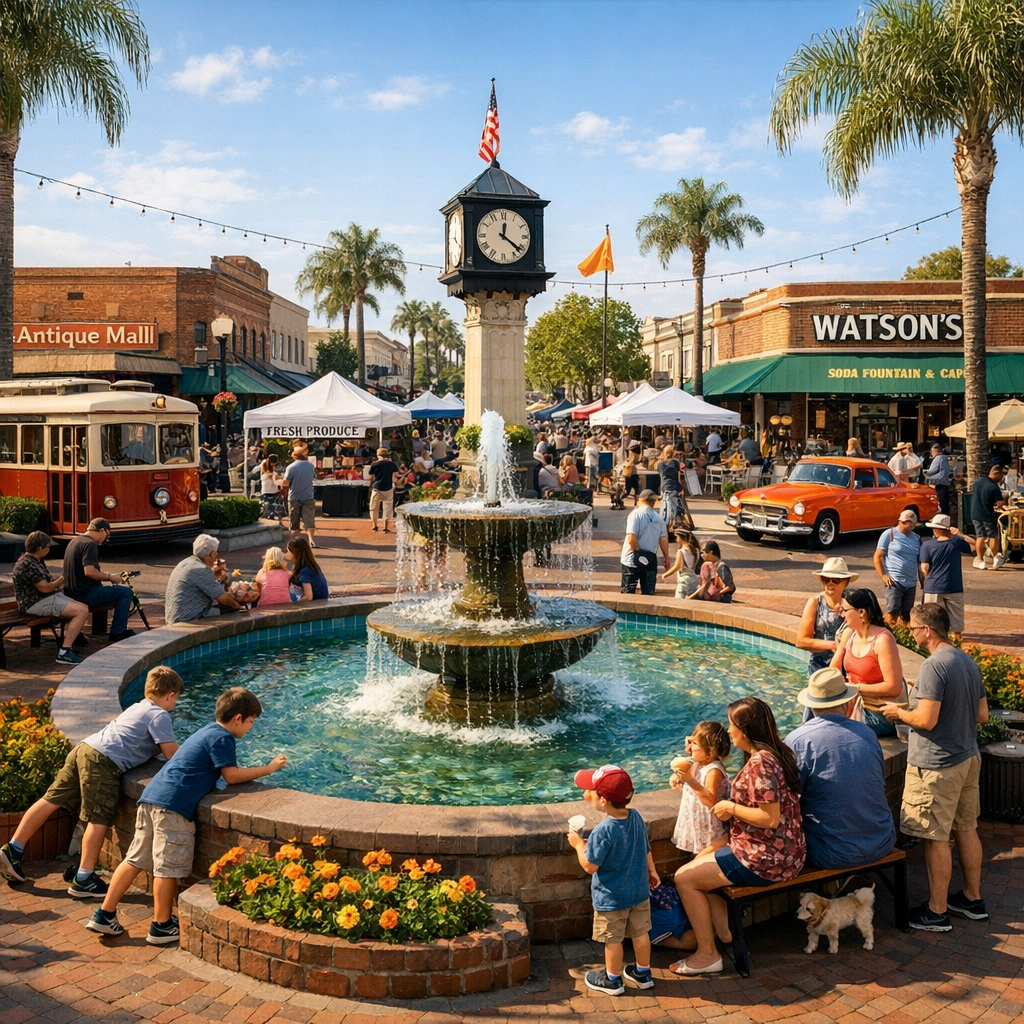
Orange, California, is a city where history and community intertwine, creating a unique tapestry that continues to thrive. From its early days as a citrus hub to its present-day cultural vibrancy, Orange embodies a spirit of resilience and unity.
A Glimpse into the Past
Founded in 1871 on part of the old Rancho Santiago de Santa Ana, Orange was initially named Richland. The town was laid out in 1871 and renamed in 1875 for its orange groves. Both the Southern Pacific and Santa Fe railways arrived in the 1880s, encouraging development of the area. Orange was initially a citrus-packing centre. It subsequently developed with the Los Angeles metropolitan area and acquired some light manufacturing. Orange is the seat of Chapman University (established 1861 in Los Angeles, relocated 1954) and a community college (1985). Inc. city, 1888. Pop. (2010) 136,416; (2020) 139,911. [1]
Preserving the Plaza
At the heart of Orange lies the historic Plaza, a testament to the city’s commitment to preserving its heritage. Unlike many Southern California cities, Orange has maintained its original downtown layout, with the Plaza serving as a central gathering place for residents and visitors alike. This dedication to preservation has earned Orange the nickname “Plaza City.” [2]
Community Engagement
The spirit of community is alive and well in Orange. Local organizations, such as the Community Foundation of Orange, actively foster community spirit by encouraging residents to share events and participate in local activities. Their community calendar is a testament to the city’s vibrant social life. [3]
Looking Ahead
As Orange continues to grow and evolve, it remains rooted in its rich history and strong community bonds. The city’s ability to honor its past while embracing the future serves as an inspiration to communities everywhere.
In Orange, the past is not just remembered; it is a living part of the present, shaping the city’s identity and guiding its future.